Attending CSUN 2025 was an unforgettable experience filled with insightful sessions, groundbreaking innovations, and inspiring individuals. From discussions on data sonification and AI-generated alternative text to case studies on companies like Microsoft and GitHub integrating accessibility into their core culture, the conference offered a wealth of knowledge. Beyond the sessions, I had the privilege of meeting passionate advocates, exploring life-changing assistive technologies in the vendor hall, and immersing myself in a community of hundreds of people with disabilities. It was a rare and powerful environment where accessibility wasn’t just a topic of conversation—it was a lived experience.
Here are a few of the many highlights from my time at CSUN.
Finding the words: Gabby Giffords’ keynote speech
In 2011, Arizona Congresswoman Gabby Giffords was shot in the head during a meet-and-greet event at a local supermarket. Against all odds, she survived and has spent over a decade advocating for the rights of people with disabilities. Gabby has aphasia, a communication disability that makes it difficult to comprehend, find, and form words, even though her cognition remains fully intact.
In her address, Gabby and her speech pathologist shared how they spend months crafting and memorizing speeches like this one. Her words and activism were particularly poignant given the current turbulence surrounding diversity, equity, and inclusion (DEI) and, by extension, disability rights. I found myself tearing up as she called the audience to “speak out even when you have to fight to find the words.”
You can watch Gabby Giffords’ CSUN talk online. Gabby and her team have also produced a full-length documentary entitled Gabby Giffords Won’t Back Down, a testament to her resilience and advocacy.
My unexpected introduction to Deaf culture
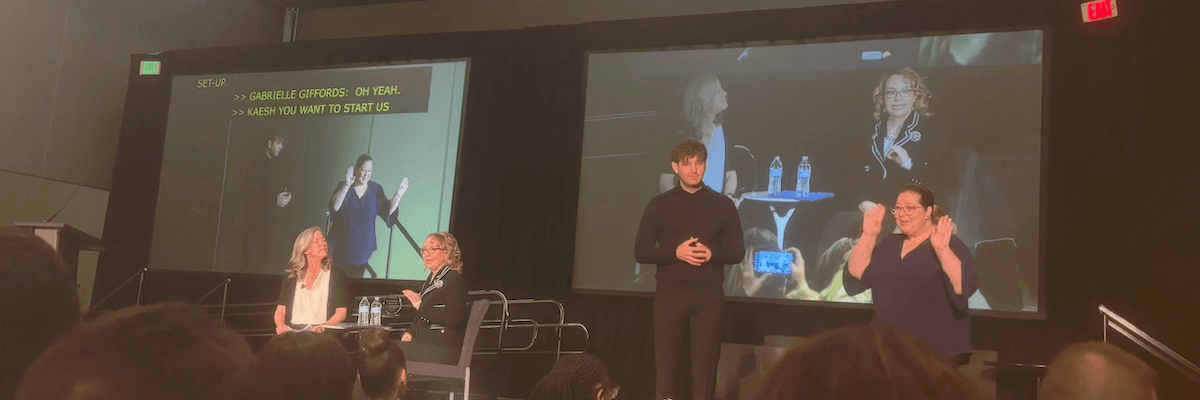
The main auditorium was packed when I arrived for Congresswoman Giffords’ speech. Making my way to the front, I found an open aisle seat in a noticeably quiet section. While the rest of the hall buzzed with conversation, this area was almost completely silent. Curious, I glanced around, trying to understand why. It didn’t take long to realize something striking—no one was speaking verbally. Instead, this section of the room was alive with visual communication.
Across the hall, two women were signing to each other from an impressive distance, effortlessly maintaining their conversation. At the front of my section, an ASL interpreter conveyed the speakers’ words, while the speakers themselves were projected onto a large screen behind. In another section, a similar setup included captions alongside the interpreter, ensuring full access to the message being shared. About halfway through the two-hour session, the ASL interpreter seamlessly switched out with another, a transition that was smooth and efficient, reinforcing the professionalism and coordination of accessibility services at the event.
Sitting there, I found myself captivated by the experience of being immersed in a Deaf space, observing the richness of sign language and the seamless communication happening around me. It was a humbling reminder of the diverse ways in which people engage with the world and an eye-opening moment of appreciation for accessibility in action.
Follow me…I think?
There were a few times that I was the person in the room with the most sight. The irony was not lost on me as I wandered through the hotel lobby, “leading” a fellow attendee who was totally blind while trying to find the elevator. Another time, I helped three blind women locate the dog relief area for their service animals.
Throughout the conference, whenever I hesitated while looking for the right way to go or strained to read a sign, a conference staff member would approach me and ask if I needed assistance. I felt seen and accepted, and in turn, I found it easy to embrace and support others with different disabilities.
Speaking About Empathy
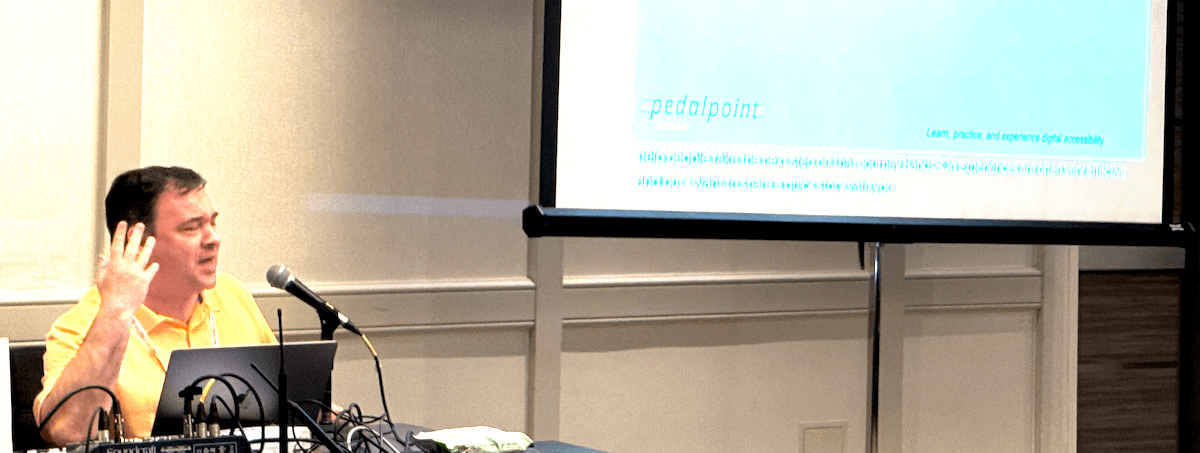
It was an incredible experience to share my thoughts on building empathy to drive accessibility initiatives within organizations. My session started with some technical difficulties—the microphone and projector weren’t cooperating—but the interactive nature of the talk saved the day. While troubleshooting the issues, I had attendees pair up and dive into one of the hands-on activities.
People seemed to genuinely enjoy the presentation. At the end, one gentleman told me it was the best session he attended at the conference. Another woman approached me about the possibility of doing public speaking with her for blind and low-vision students.
The response was more than I could have hoped for, and I am so grateful for this opportunity.
Final Thoughts
CSUN 2025 was a conference unlike any other. It wasn’t just about learning—it was about connection, shared experiences, and seeing accessibility in action. Whether it was being immersed in a Deaf space, connecting with fellow attendees with different disabilities, or receiving meaningful feedback on my own talk, I left feeling inspired, challenged, and deeply grateful to be part of this community.
I can’t wait for next year. In a time when digital accessibility finds itself in a chaotic and uncertain space, CSUN was a beacon of hope. The conference reminded me that despite the challenges, passionate advocates, inspiring technologies, and strong communities continue to push accessibility forward. CSUN 2025 reinforced just how much progress is being made in accessibility, from innovations in assistive technology to the unwavering dedication of the people driving these changes forward. More than just a conference, it was a reminder of the impact of community, collaboration, and commitment to inclusivity.