
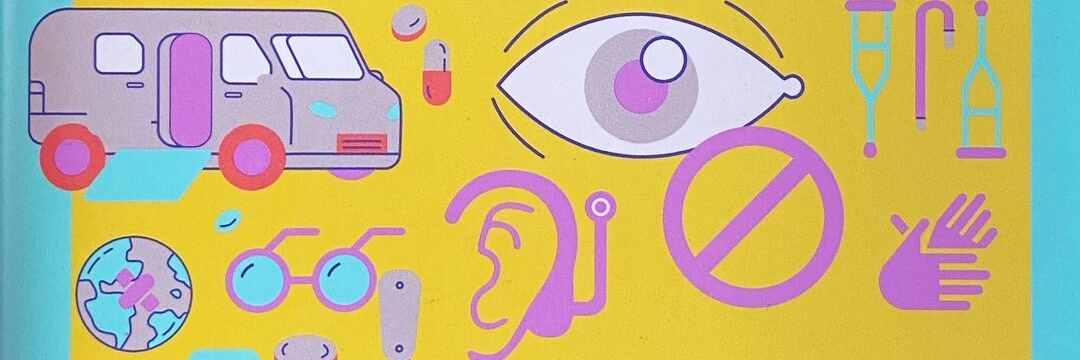
Dr. Ashley Shew’s book Against Technoableism: Rethinking Who Needs Improvement is a collection of witty and eye-opening essays exploring the intricate relationship between disability and technology. On the surface, it may seem like advances in technology vastly improve the lives of individuals with disabilities. While there is truth to this, the picture painted by the media typically tells only one side of the story. Throughout this book, Shew deftly argues that the deeper reality is more complicated and sinister.
The technoableist agenda
“It should go without saying that we need to center disabled people as experts about disability and technology,” asserts Shew. “Yet if we do, we really trouble some underlying assumptions of the ableist world we’re in.” Ableism is any bias or stigma held against disability or disabled people, and it is rampant throughout our society and history.
The hero of the traditional American story has always been a determined self-made white man standing erect with influence, prosperity, and progress. There are so many problems with this caricature, and the one in focus here is that it cannot tolerate anything it sees as different, weak, or dependent. Disability has all of these characteristics, and so it must be ignored, eliminated, or rehabilitated. The American hero sees technology as a means to redeem disabled people so they can be “normal” contributors to society. In this view, technology is a way to overcome disability and free its victims from their infirmities.
From this myopic perspective, disabled people are categorized as pitiable freaks, moochers, shameful sinners, bitter cripples, or inspirational overcomers. They are pressured to make themselves palatable and “include-able” in mainstream society. The media portrays technology as the ultimate solution to the problem of disability. Yet its stories, which are almost always told by non-disabled people, are more often about technological progress than disability. There is a huge difference between what is touted as “liberating technology and actual user experiences,” writes Shew.
The disabled truth
The lived reality of disability with tech is messy. Technology is not a savior. It takes time to adapt and adjust prostheses, hearing aids, eyeglasses, and other assistive tools to the particular circumstances of people’s lives. Tech is expensive and not universally available. It breaks, and sometimes people with disabilities just don’t want to use it.
Shew, who is a leg amputee, uses a prosthetic leg, crutches, and a rolling walker to get around, depending on her energy level and mobility needs. Despite these choices, she laments that the social pressure to walk “is no joke, so deeply embedded are the notions of fitness and vigor to being a good person and citizen.” Walking is society’s ultimate goal for amputees, and advanced prosthetic legs and feet are the obvious way to get there. When Shew and her peers with limb differences opt for something else, even for just a little while, they feel judged for resisting the miracle of technology. Yet they aren’t rejecting tech; they are simply keeping it in its proper place so they can be their authentic disabled selves.
I have Nystagmus, which causes my eyes to make repetitive uncontrolled movements that make it hard for them to focus at a single point for very long. Glasses, which typically have a central focus point, have proven unhelpful to me because I need to move my head around to adjust my bouncing gaze to march the angle and direction the lenses are designed for. This is exhausting and untenable. (I’m getting a headache just thinking about it now.)
Yet so many times people ask me if I’ve tried corrective lenses to alleviate this condition. (See the ableist language there?) I know they mean well, but is it realistic to think that after living with Nystagmus for my entire life that I would have never considered ways to get around this annoying and disruptive aspect of my vision? The technology available just doesn’t work for me. If and when it does, I will be happy to put it to good use, but as far as I know, that day hasn’t come yet. (I would love to chat if you are aware of advances in vision technology which address Nystagmus or its symptoms. Please get in touch with me if you have thoughts about this.)
The future is disabled
Techno-optimism would have us believe that the future will be disability-free, but the exact opposite is true. Every one of us is “temporarily abled” and headed for disability as our bodies age. The whole world is becoming more disabled with climate change, mutating viruses, and other factors rendering our environment less hospitable to our bodies.
I see this first-hand with the rise in mental health issues, delayed social development, and signs of addictive pathways that have come with the overuse of smartphones among children and adolescents. The very technology meant to keep us connected and productive is having the opposite effect on our kids. In response to this, my son’s school is rolling out a cellphone ban for the coming academic year to curb the negative impact the devices have on academics, student behavior and school culture.
I think this is a helpful step toward more effective public school education. However, it’s only a tiny drop in the ocean of tech dependency in our world. After graduation, my son will need to develop and live by his own system if he wants to moderate his screen time. This is no small challenge in a society so saturated by technology that members who cannot use it or don’t want to are excluded by default.
The tools we build shape us so that it’s very hard for us to function without them. We create them to improve our lives, and they often do. Yet as we become over-reliant on them, their benefits mingle with disability, either directly or indirectly. Every widely used technology — smartphones, computers, cars, mass-production, industrial agriculture — comes with its own list of physical and mental impairments that result from its excessive use. Even so, we engineer our civilization to at least prefer and at most require the adoption of these advances.
The futurists aren’t seeing the whole picture through their rose-colored glasses. Technological progress is disabling our planet and its inhabitants at least as much as it is solving its problems. As a result, disability will become more, not less, ubiquitous and pronounced as the years roll on.
Conclusion
“Ableism is the sauce we all marinade in,” quips Shew. This is true for everyone, even people with disabilities. I’m a blind guy, and I still often need to challenge the awkwardness and discomfort I feel when I’m with other people with visual impairments. After all, I’ve worked really hard to fit in and thrive in the “normal” sighted world. (Whoops, there it is again.) I strive to counteract my own bias and hypocrisy with increasing self-awareness and empathy, along with a healthy skepticism of my own limited perspective. It’s a lifetime journey, and one everybody should embark upon.
Tech is my livelihood, and I am certainly not against technology. I just want us to be wary of the simplistic and harmful idea that tech is the perfecter of the human condition. Technology is very useful. It’s also infatuated with itself, often at the expense of the people it should be serving.
Question: Have you ever felt excluded by a technology? How did that make you feel, and how did you respond in that situation?