

Blind people and their advocates are incredibly resourceful, and their creations have profound impact on the entire world. There are so many mainstream technologies that have been pioneered and advanced by blindness–audiobooks, ebooks, video tech support–and the list goes on.
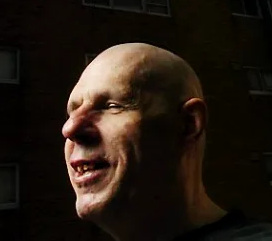
Stories abound of how niche technologies developed for and by blind people keep changing the world for the better. For instance, in his book The Country of the Blind Andrew Leland tells the fantastic and colorful tale of Joe Engressia (who legally changed his name to Joybubbles, a blind hacker at the center of the phone phreaking phenomenon who figured out how to make free long-distance phone calls by whistling a high E note. Steve Jobs once said that without the work of phone phreaks like Joybubbles, there would have been no Apple.
In fact, you are likely using several technologies developed with and for blind people right now.
Blind types hold the keys to innovation.
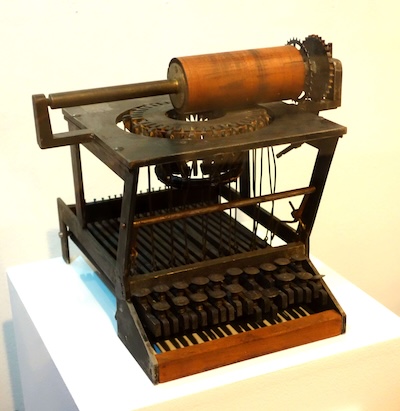
In 1808, Italian inventor Pellegrino Turri created a device to help his blind friend, Countess Carolina Fantoni da Fivizzano, to write letters independently. Historians generally view this mechanical apparatus as the first typewriter. Later that century, American inventors and printers refined the machine into the basic form we recognize today with its carriage return and QWERTY keyboard. Over time, these evolved into the clickity-clackity 60-words-per-minute contraptions used in my high school typing class.
As the years progressed, electric typewriters arrived on the scene, then morphed into word processors. With the advent of the personal computer, the typewriter keyboard was adapted into the ubiquitous input device it is today. Through all these advances, the keyboard linked to your device, be it a desktop computer, laptop, or digitally-rendered replica on your phone screen, retains its connections to the past. The same inefficient letter layout and the familiar key press sounds endure. Terms like carriage return (a.k.a. the Enter key) are still with us, even though there is really no such thing on our gadgets. And the original purpose of helping blind people, and almost everyone else, to write letters (now often referred to as “social media posts”) is still intact.
A picture is worth a thousand words, literally
Optical character recognition (OCR) is the conversion of printed or handwritten text into machine-readable codes that can be manipulated just like the letters and words we type on our computer keyboards, OCR can encode text from scanned pieces of paper or electronic documents and images.
Ray Kurzweil is often credited with inventing OCR when his company built a machine to read printed text out loud to blind people. This device included a flatbed scanner and a text-to-speech synthesizer. Today, OCR technology is commonly included in computers, smartphones, and software, allowing us to do things like scan documents and extract the text from the digital copies.

Note that it’s best to keep text out of images whenever possible for people who cannot see the image and don’t have the tech to read its contents to them. Even so, chances are that the device you are using or some program installed on it has this capability.
“Alexa, where did speech recognition technology come from?”
in 1961, IBM unveiled Shoebox, a machine that could solve simple mathematical equations spoken to it by a person. The company continued to innovate in this space, and in 1980 released a talking typewriter that enabled blind and visually impaired people to dictate common words and phrases to be typed onto a page. This is just one example of how voice recognition technology found its first widespread area of application, helping people with physical disabilities (including blindness) interface with computers without a keyboard or mouse.
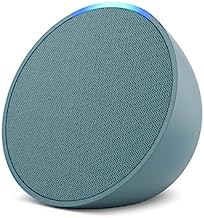
Today, voice recognition technology is nearly universal. The 2022 Smart Audio Report released by NPR and Edison Research stated that 35% of American adults owned a smart speaker and 62% use a voice assistant on devices like smartphones, TV remotes, in-car systems, and laptops. The report also showed that usage of voice controlled technology is increasing, with daily listening time and tasks completed on the rise. It’s very likely that there is a voice assistant on the device on which you are reading this article, and there’s a good chance you use it regularly or will take advantage of it in the near future.
Conclusion
It is clear that blindness and disability are powerful drivers of technological innovation and adoption. This remarkable influence makes me excited and hopeful about the future of digital accessibility, This field is at the confluence of the streams of technology and disability, and it is exhilarating to imagine how the tools we create might improve not only the lives of blind people, but the whole world too.
How many technologies that have their roots in disability have you used today?
Articles in this series
 Do I see too well to be blind? I often feel too sighted to be blind, but too blind to function fully and freely in a sighted world. Andrew Leland helps me articulate and make sense of this in his book "The Country of the Blind."
 Skiing with my eyes closed: Is blindness intrinsic or irrelevant to who I am? I wrestle with the paradoxes inherent in blindness and their impact on my identity. How can I hold the ambiguity and opposing forces related to my vision in tension with each other?
 Blind inventions shape your world. You’re using them right now. Blind people and their advocates are incredibly resourceful, and their creations have profound impact on the entire world. In fact, you are likely using several technologies developed with and for blind people right now.