As accessibility advocates, we often find ourselves in delicate conversations—ones that involve competing priorities, limited resources, and stakeholders who may not yet understand the urgency of inclusive design. In these moments, the words we choose matter deeply.
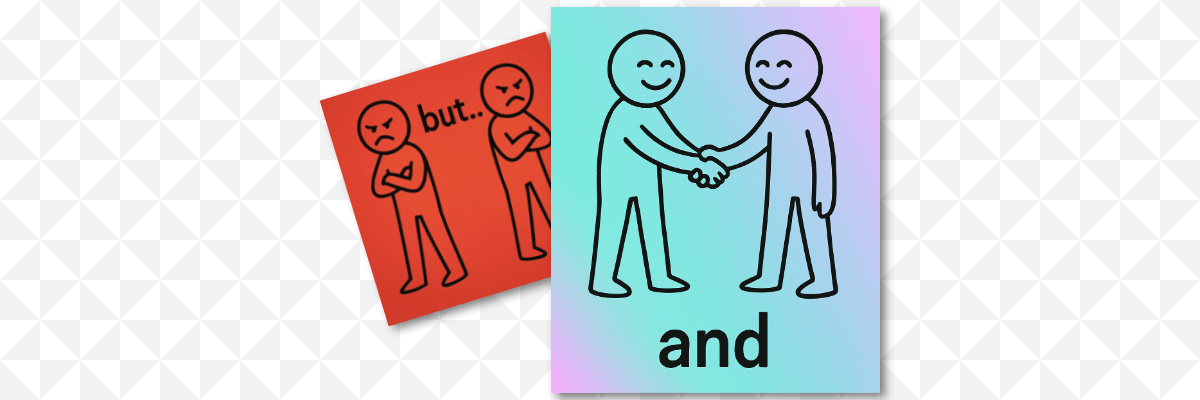
One of the smallest yet most powerful shifts we can make is replacing the word “but” with “and.” It’s a technique my therapist shared with me years ago, and it genuinely changed my life. That one word helped me reframe conflict, communicate more openly, and build stronger, more trusting relationships at home and at work.
Why “but” undermines connection
On the surface, “but” seems harmless. It’s just a conjunction, right? Yet psychologically, it’s a gatekeeper. It tells the listener, “Everything I just said? Never mind—what matters is what comes next.”
- “I know accessibility matters, but we’re on a tight deadline.”
- “Yes, that’s a good point, but it’s not how we usually do things.”
- “We care about inclusion, but our resources are limited.”
Each of these phrases implies conflict and triggers defensiveness. Using “but” can subtly shift the tone of a conversation from cooperative to confrontational. It devalues what came before, whether or not that was the speaker’s intent.
When people feel invalidated or dismissed, they disengage. They stop listening. And that’s the last thing we want—especially when we’re trying to create lasting change around accessibility.
Why “and” builds bridges
Now let’s flip the script.
- “I know accessibility matters, and we’re on a tight deadline.”
- “That’s a good point, and it’s different from our usual process.”
- “We care about inclusion, and our resources are limited.”
“And” allows both realities to exist simultaneously. It invites tension instead of rejection. It acknowledges that multiple priorities can coexist—even when they’re in conflict. Instead of denying someone’s perspective, you’re acknowledging it and adding to it. This small shift creates space for mutual respect and creative collaboration.
From a behavioral psychology standpoint, “and” supports emotionally safe communication. It helps regulate nervous system responses, reduces reactivity, and fosters non-defensive dialogue. People feel heard and validated—which makes them more open to new ideas, including accessibility goals they may not yet have fully embraced.
Why this matters for accessibility advocacy
Accessibility conversations often require us to:
- Hold competing priorities in tension
- Balance legal and ethical obligations with tight timelines
- Reframe objections without creating shame
- Build coalition, not compliance
The word “and” is a surprisingly effective tool for this work. It communicates empathy without sacrificing clarity or urgency.
Here are three real-world scenarios where “and” can change the tone—and the outcome—of accessibility conversations:
Leadership buy-in
❌ “I know we need to increase revenue, but accessibility is the law.”
✅ “We need to increase revenue, and accessibility is a legal and ethical imperative that builds trust and loyalty with our customers.”
The second version validates the business goal and introduces accessibility as a strategic complement—not a competing interest.
Budget constraints
❌ “We want to be inclusive, but we can’t afford the extra effort right now.”
✅ “We want to be inclusive, and we’re navigating real budget limitations—so let’s explore what’s possible within our means.”
The second statement recognizes financial pressures while keeping the inclusion conversation open, signaling trust and shared ownership of the challenge.
Developer frustration
❌ “We implemented the accessibility fix, but it broke our layout.”
✅ “We implemented the accessibility fix, and it introduced layout issues we’ll need to address.”
“And” invites problem-solving. “But” sounds like surrender.
Final thought
Empathy isn’t just about listening—it’s about how we respond.
Replacing “but” with “and” might seem like a small tweak, but it can have a profound impact. It diffuses tension. It affirms complex realities. And most importantly, it creates space for accessibility to be understood not as a burden or an afterthought, but as an integral part of how we care for all users.
So the next time you’re facing resistance or competing priorities, try this:
Swap your “but” for an “and.”
Watch what opens up.