In a recent post, I wrote about how The Country of the Blind by Andrew Leland is helping me wrestle with and articulate my blindness and how it shapes who I am. Watch the author’s own introduction to the book in the following video.
In this article, I want to explore the paradoxes of blindness, a theme that runs deep through Leland’s book. I have already asserted that blindness is not a fixed point but a spectrum, which can lead to conflicting questions like “Am I too sighted to be blind and too blind to be sighted?” This is a paradox I have struggled with because I feel like I move back and forth on the blindness spectrum from day to day. The leaves on a tree can look wonderfully distinct and individual on a sunny afternoon in high summer, whereas the “Don’t Walk” signs near my house can become almost imperceptible on in the murky winter dusk when I’m feeling down. So am I too blind or too sighted? It depends.
Is blindness a medical or social problem?
Another paradox in blindness, and with disability in general, stems from the different models that are used to define and classify disability. Among the most prominent of these are the medical and social models. The former views disability as a shortcoming within a person to be corrected or cured. The latter asserts that disability is a function of social barriers that prevent people with impairments from participating freely and fully in society.
The clash between these two perspectives has been fierce and frequent. Disability advocates insist that reducing a person’s blindness to a medical issue leads to discrimination. Yet scientific research and breakthroughs in technology and medicine make it more and more feasible for blind and visually impaired people to live “normal” lives” in a sighted world.
These positions may seem to stand in stark opposition to each other, “but the lived reality of blindness…exists somewhere between these two extremes,” says Leland. Culture, heredity, heritage, and physiology are interconnected. Leland continues,
Disability scholars are now pushing past the medical-social binary and toward–as the critic Jonathan Sterne helpfully puts it–“a conception of biology as having historical dimensions, and history as having biological dimensions.”
I agree with Leland’s “both/and” stance. My life is in part shaped by my blindness, and I have benefited greatly from optometrists and low vision specialists. I use a screen reader every day. Even so, I hold that our companies, communities, and countries have a very real and pressing responsibility to make the physical and digital spaces of our world accessible to everybody. This is one of the driving forces behind my work in web accessibility.
Is blindness incidental or central to one’s identity?
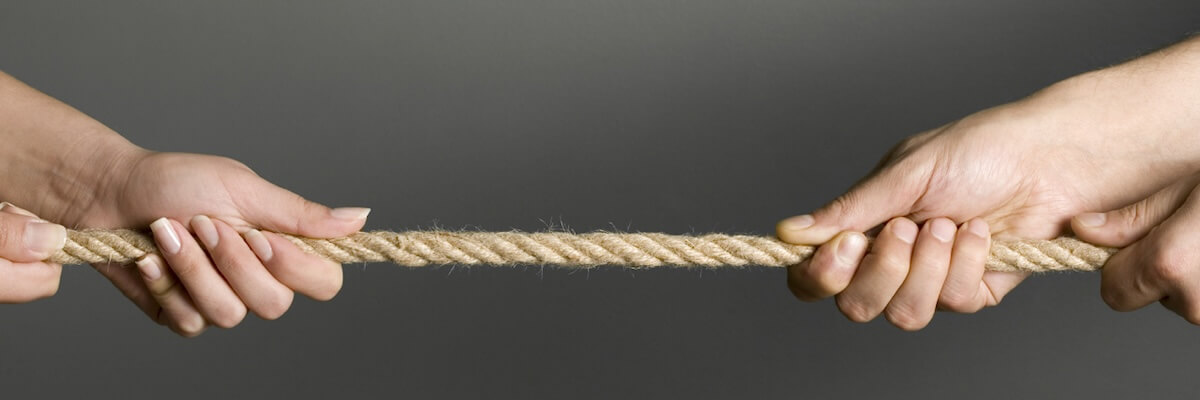
A further paradox is the seemingly opposing viewpoints that advocacy groups take on how blindness and disability should be addressed. On one hand, blindness can be seen as an incidental characteristic having no bearing on one’s status or opportunity. On the other, blindness is a very real condition demanding recognition and accommodation. Leland describes a potent example of the clashes between these ideologies.
When the ADA [Americans with Disabilities Act] was being drafted in 1989, the NFB [National Federation of the Blind] came out against the bill. “So-called accommodations may often themselves be discriminatory,” Kenneth Jernigan, the former NFB president of nearly twenty years wrote in the Braille Monitor six months before the bill passed.
This leaves me to wonder, along with Leland, how being blind can be at once incidental and central to one’s identity. Leland aspires to the answer put forth by the late bioethicist and disability studies pioneer Dr. Adrienne Asch, “that everyone ought to ignore blindness, including the blind themselves, until the prejudice and discrimination of the sighted world forces us to pay attention to it again.”
This is a worthy pursuit, but my lived experience seems much more pragmatic and mundane. Again, my answer is, “It depends.” I want to assert and live into my independence, and yet I need to ask for and receive help, sometimes at the same time. I am learning to see this not as failure, but authenticity.
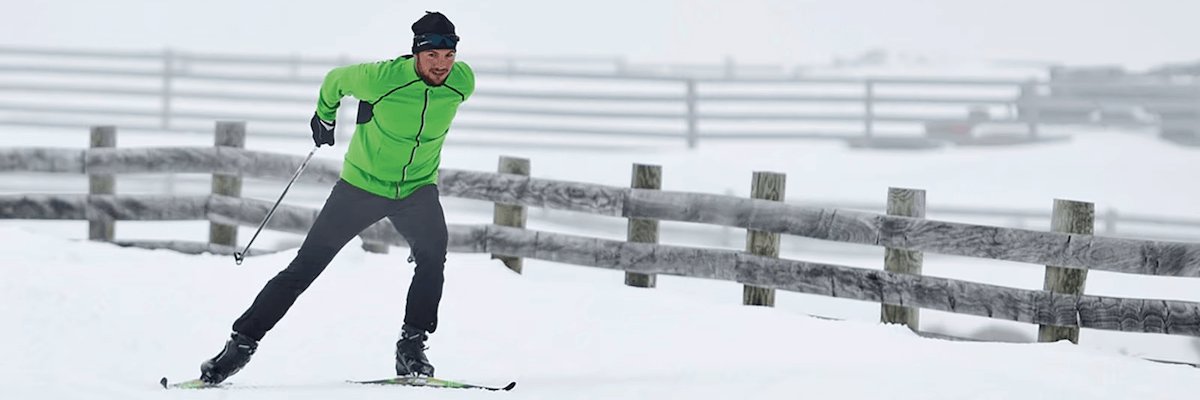
I was a member of my high school cross-country ski team, which raced using the skating style of skiing. This is hard work on its own, and the balancing issues that accompany my nystagmus made it even more challenging. Even so, I loved it once my mind and body figured out the rhythm and motions. It was exhilarating to zoom through the woods over hard-packed snow on a sunny Saturday midwinter morning. Sure, the glare of the sun and my darting visual focus made it tricky to stay upright on tight turns. Sure, I smashed face-first into a tree or two like George of the Tundra…er Jungle. But my coach encouraged me to get up and keep going, and my mom and dad cheered me on despite taking flack from other kids’ parents about letting their handicapped son engage in such a dangerous activity. I am so grateful for their unwavering support.
Sometimes I would close my eyes for several seconds while gliding down a long straightaway. Ironically, “shutting off” my eyes like this helped me recenter. It was easy to relax my body and calm my nerves as I zoomed through the darkness, listening to the wind whistling by and the swoosh of snow beneath my skis as the sun and the breeze warmed and cooled my face at the same time. The peace o these moments was so wonderful and free.
Looking back, this is what it feels like for me to simultaneously embrace my blindness while refusing to let it define me. Holding these paradoxes in tension takes a whole lot of sustained mental and emotional effort, but I am finding strength and agency in stepping back from these jostling forces, knowing that I have solid influence on how I relate and respond to each of them.
Articles in this series
 Do I see too well to be blind? I often feel too sighted to be blind, but too blind to function fully and freely in a sighted world. Andrew Leland helps me articulate and make sense of this in his book "The Country of the Blind."
 Skiing with my eyes closed: Is blindness intrinsic or irrelevant to who I am? I wrestle with the paradoxes inherent in blindness and their impact on my identity. How can I hold the ambiguity and opposing forces related to my vision in tension with each other?
 Blind inventions shape your world. You’re using them right now. Blind people and their advocates are incredibly resourceful, and their creations have profound impact on the entire world. In fact, you are likely using several technologies developed with and for blind people right now.