axe-con is the annual, virtual, free, digital accessibility conference presented by Deque Systems. This was my fourth year attending the event, and as usual, it did not disappoint. Here’s a rundown of some of my favorite sessions from axe-con 2024.
Each heading below links to the Youtube video for its corresponding session. At the time of this writing, axe-con 2024 session videos are not linked from Deque’s Youtube page. To watch other session videos from the conference, you can register for an axe-con account, view the conference agenda, and follow the links in the schedule to the session videos you want to view.
Neuroinclusive Content Design with Laurie Cameron-Back
15-20% of people in the United States have some form neurodiversity. It’s a very good idea to ensure that a website’s content is accessible to this large portion of the population. Short paragraphs, short sentences, and aiming for a reading age of 9-15 (which is not the same as a person’s actual age) are just a few of the numerous best practices to keep in mind when writing content. I especially enjoyed these recommendations.
- Avoid “naked links.” Don’t paste a bare URL like https://www.google.com/search?q=descriptive+link+text into your copy. It’s hard to read, particularly for assistive technology users. Instead, use descriptive link text to communicate the purpose and destination of each link.
- Extensive FAQs may indicate copy that isn’t descriptive enough. Structured how-to guides might be a better approach.
- Use sentence case for web page titles and headings. It takes more time and energy to read Headings in Title Case, and Proper Nouns can easily get lost in the mix. Sentence case translates into other languages more easily and has a friendly demeanor when compared to the Formal Authority of Title Case. Reserve title case for titles of books, movies, etc. for which it is intended.
Favorite quote: “PDFs are a hangover from print days” as they focus more on layout than content. Write your content in accessible HTML instead.
Using the WebAIM Million and User Surveys to Inform Accessibility Efforts with Jared Smith
The 2023 WebAim Million Report found that 96.3% of homepages of the top one million websites have an average of 50 accessibility errors that can be automatically detected. Clearly, there’s a lot of work to be done. The vast majority of these errors are due to only six accessibility issues.
| Issue | Percentage of homepages | WCAG success criterion |
|---|---|---|
| Low contrast text | 83.6% | 1.4.3: Contrast (Minimum) |
| Missing alternative text | 58.2% | 1.1.1: Non-text Content |
| Empty links | 50.1% | 2.4.9: Link Purpose (Link Only) |
| Missing form input labels | 45.9% | 3.3.2: Labels or Instructions |
| Empty buttons | 27.5% | 4.1.2: Name, Role, Value |
| Missing document language | 18.5% | 3.1.1: Language of Page |
Favorite quote: “Addressing only these few types of issues would significantly improve accessibility across the web.”
The Folly of Chasing Demographics with Heydon Pickering
This cheeky talk from the creator of the popular Webbed Briefs videos focuses on how ineffective it is to make assumptions about which users prefer what tools and experiences. Key points include:
- Design for the tools and not for the person you think will use it. You don’t know who this will be.
- Accessibility is about achieving parity and not popularity. A design can be equally bad for everyone.
- Do less in general, because most of what you do won’t work. Not everything needs to be accessible, some things shouldn’t exist at all.
Favorite quote: “screen reader user !== blind user and ‘blind’ can mean a host of different things anyway (it’s just a shorthand).”
How to Build an Accessibility Program and Culture panel discussion
Gurpreet Kaur, vice president of accessibility at Mastercard, and Mike Shebanek, head of accessibility atMeta (and the inventor of the VoiceOver screen reader) discuss how essential it is to understand and align with an organization’s culture when building an accessibility program. There are some great stories here, such as the tale of making Yahoo Mail accessible, which illustrates one of the key takeaways of this session; find one use case where you can integrate accessibility really well and use that as an example to gain traction for a new program.
Favorite quote: “Culture eats strategy for breakfast.”
Helping Debunk Disability Stigma with Squirmy and Grubs
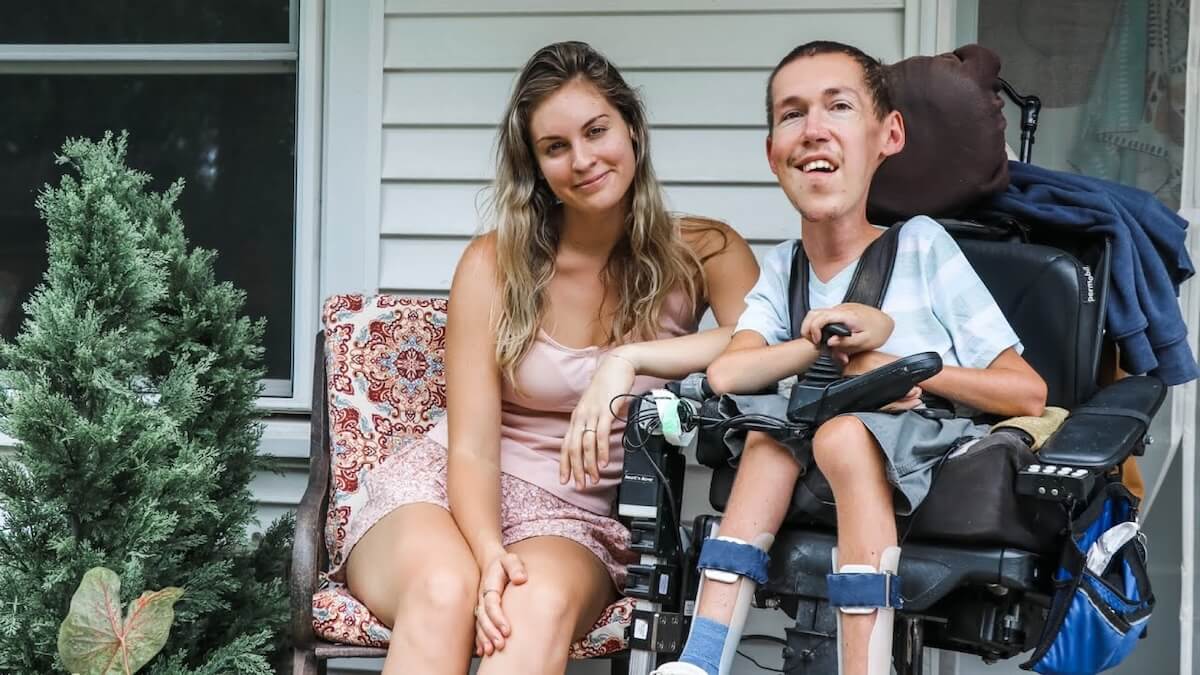
Shane Burcaw and Hannah Aylward are a married couple who run the Squirmy and Grubs YouTube channel, which features an unfiltered look at their interabled relationship. Shane having spinal muscular atrophy, and the pair have become popular disability advocates.
In this talk, Hannah and Shane share how our personal stories can help combat ableism and fuel advocacy efforts. Their anecdotes are at once funny, infuriating, enlightening, and full of hope.
Favorite quote: (Shane’s reply to a woman who laid hands on him in a diner, “scream praying” for God to fix this boy and make him happy during one of his first outings with Hannah.) “Oh, no thank you. I have a very happy life. In fact, look who I’m on a date with.”
Did you attend axe-con 2024? What were your favorite sessions?